
How to Pass a DOT Roadside Inspection Every Time
Getting waved into an inspection point does not have to send your stomach into knots. A DOT roadside inspection goes a lot smoother when the groundwork is already done before you ever see those flashing lights. Most drivers who breeze through a stop are not lucky. They simply know what an officer is going to ask for, they keep their records within reach, and they have already looked their truck over with their own eyes. That kind of preparation turns a stressful moment into a routine one.
Understanding CVSA Inspection Levels
Not every inspection looks the same. Officers can choose from several inspection levels, and knowing what each one covers helps you understand what might actually get checked during your stop. A CVSA inspection can focus heavily on the truck, lean mostly on your paperwork, or land somewhere in between. Once you know which level you are dealing with, you have a much better sense of what to have ready and where the officer’s attention is likely to go.
Level 1 vs. Level 2 vs. Level 3
Once you know an inspection is happening, the next question is how deep it will go. Here is how the three levels compare so you know what to expect.
- Level 1: Is the most thorough of the three. It covers your driver records along with a detailed look at the truck, including brakes, tires, lights, steering, suspension, coupling devices, and cargo securement. If you want to know what a level 1 inspection really involves, think of it as the full check.
- Level 2: Still includes a review of your driver documents, but the vehicle portion is a walk around look. The officer usually will not go underneath the truck the way they might during a Level 1.
- Level 3: Stays focused on you as the driver. Expect questions about your license, medical card, hours of service, and carrier identification rather than a deep dive into the truck itself.
Documents and ELD Records You Need Ready
Having the right paperwork within arm’s reach saves time and takes the pressure off. Solid DOT inspection documents to keep handy include:
- Your driver license or CDL
- Medical certification, if applicable
- Record of duty status
- Vehicle inspection reports
- Periodic inspection records
- Carrier identification information
- Shipping or hazardous materials paperwork, when it applies
- Any supporting records you already carry with you
Keeping these organized in one spot, rather than scattered across the cab, is one of the simplest habits that speeds up every stop.
Vehicle Checks Inspectors Look For
Once your records are squared away, attention naturally shifts to the truck itself. Officers are trained to look at braking systems, tire condition, lights, steering, suspension, coupling equipment, wheels and rims, cargo securement, and anything that could point to a fuel or exhaust problem. None of this should feel like a mystery if you already walk your truck before every trip.
Brakes, Tires, and Lights
These three areas cause more roadside trouble than almost anything else on the truck. A quick walk around before you leave catches most problems before they ever become an officer’s problem.
- Brakes: Watch for air leaks, unusual noises, or anything that feels off during normal driving.
- Tires: Look for visible damage, cuts, uneven wear, low pressure, or a damaged wheel or rim.
- Lights: Check headlights, brake lights, turn signals, and marker lights before you ever pull onto the road.
Catching these issues during your own pre trip check means the officer finds nothing worth flagging.
Cargo securement deserves its own moment of attention too. CVSA named it the vehicle focus area for its 2026 Roadcheck, and last year’s enforcement numbers show why. In 2025, inspectors issued more than 34,000 cargo securement violations, with over 18,000 tied to loads that were not secured against leaking, spilling, or falling. Taking a minute to check that your load is properly contained and immobilized before you leave the yard can save you from an easy violation.
Showing Your ELD Logs Correctly During a Stop
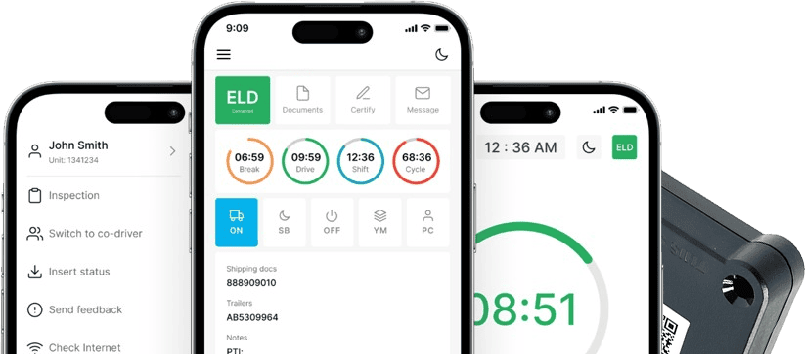
Accurate logs only help you if you can pull them up quickly when asked. Know exactly where the inspection screen sits on your device before an officer requests it, not while they are standing at your window. Review your current log before you start driving, keep the device accessible, and be ready to display it or use its transfer method if the officer asks for one. An ELD roadside inspection goes far smoother when this part of the process feels automatic instead of rushed.
Common Violations and How to Avoid Them
Most violations trace back to a handful of avoidable problems. Hours of service mistakes, missing or inaccurate records, ELD issues, worn brakes or tires, lighting problems, and cargo that was not secured properly all show up again and again. Staying on top of FMCSA compliance simply means catching these small issues before a trip rather than after an officer does.
Top Out-of-Service Violations
- Brake problems that go unnoticed before departure
- Tire damage that gets ignored
- Hours of service records that are not up to date
- ELD or logging issues that cannot be resolved on the spot
- Missing driver credentials
- Cargo that was never properly secured
Not every brake issue or logging mistake automatically shuts a truck down. A violation only becomes one of the true out of service violations when it meets CVSA’s specific Out-of-Service Criteria, at which point the driver, truck, or cargo cannot continue until the condition is corrected. Staying ahead of these issues keeps your trip on schedule and out of that territory altogether.
Conclusion
Passing a roadside inspection really comes down to what you do long before the truck ever slows down. Organized records, a working set of lights and brakes, a secured load, and logs you can pull up in seconds all add up to a stop that finishes quickly and without surprises. Building that routine into every trip is what separates a smooth inspection from a stressful one, and it is exactly the kind of ELD and log readiness that LogSafe US helps drivers and fleets stay on top of every day.
Frequently Asked Questions
What documents do I need for a DOT roadside inspection?
Keep your license or CDL, medical certificate, record of duty status, vehicle inspection reports, and carrier identification within easy reach. Anything else specific to your load, like hazmat paperwork, should be nearby too.
What is a Level 1 inspection?
It is the most detailed inspection an officer can perform. It combines a full review of your driver records with a hands on check of the truck, covering brakes, tires, lights, steering, and more.
How do I show my ELD logs during a stop?
Pull up your current log on the inspection screen before the officer asks, then follow the display or transfer method your device supports. Practicing this ahead of time keeps the moment quick and simple.
Why do trucks get placed out of service?
A truck or driver is placed out of service when an issue meets CVSA’s Out-of-Service Criteria, such as a serious brake defect, an unresolved logging problem, or cargo that is not properly secured.
Does cargo securement really matter that much?
Yes. It is one of CVSA’s named focus areas for 2026, and loose or unsecured loads consistently rank among the most common reasons trucks get flagged during inspections.


